

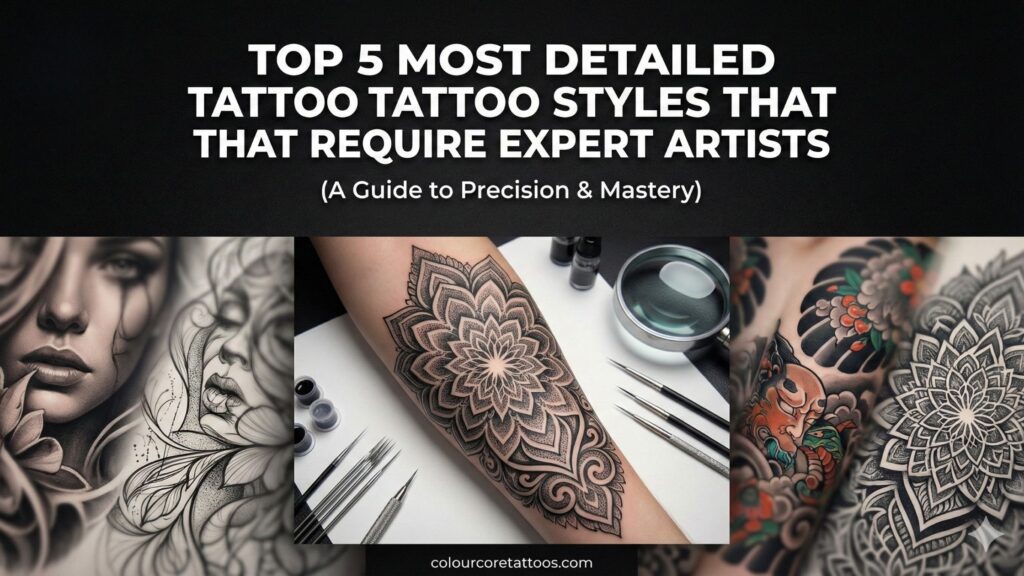
Getting a tattoo is easy.
Getting a highly detailed tattoo that still looks sharp after years is not.
Some tattoo styles look impressive on Instagram for a few weeks… and then blur, fade, or lose clarity. Others stay powerful for years because they were executed by artists who understand detail, skin behavior, depth, and long-term aging.
If you’re researching the most detailed tattoo styles, especially styles like realism tattoo style or tattoos that demand portrait tattoo expertise, this guide will help you understand:
- Which styles truly require expert artists
- Why these styles are unforgiving to mistakes
- What separates professional execution from average work
- How to choose the right artist for each style
This article is written for customers who don’t want regrets.
What Makes a Tattoo “Highly Detailed”?
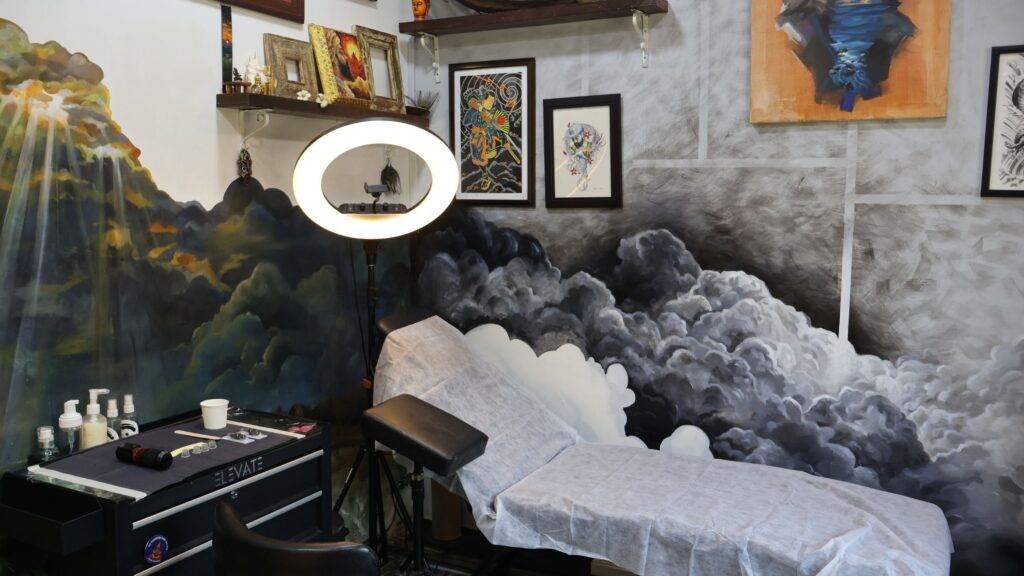
A detailed tattoo isn’t just about adding more lines.
True detail means:
- Fine control over line weight
- Precision in shading transitions
- Correct depth consistency
- Strong contrast planning
- Understanding how details age on skin
- Mastery of skin tone and texture
Highly detailed tattoos leave no room for error.
One wrong stroke can:
- Distort facial features
- Cause patchy shading
- Blur micro-details
- Lead to premature fading
That’s why these styles demand expert-level tattoo artists, not just talent.
Why Detailed Tattoo Styles Are Not for Beginners
Detailed tattoos challenge artists in ways simple designs don’t.
Here’s why:
- Skin is not flat like paper
- Skin stretches, heals, and ages
- Ink spreads slightly over time
- Sweat, sun, and friction affect clarity
- Different skin tones hold detail differently
An expert artist plans for all of this before the needle touches the skin.
Now let’s break down the top 5 most detailed tattoo styles that absolutely require expert-level execution.
1. Realism Tattoo Style
Why Realism Is One of the Most Detailed Tattoo Styles
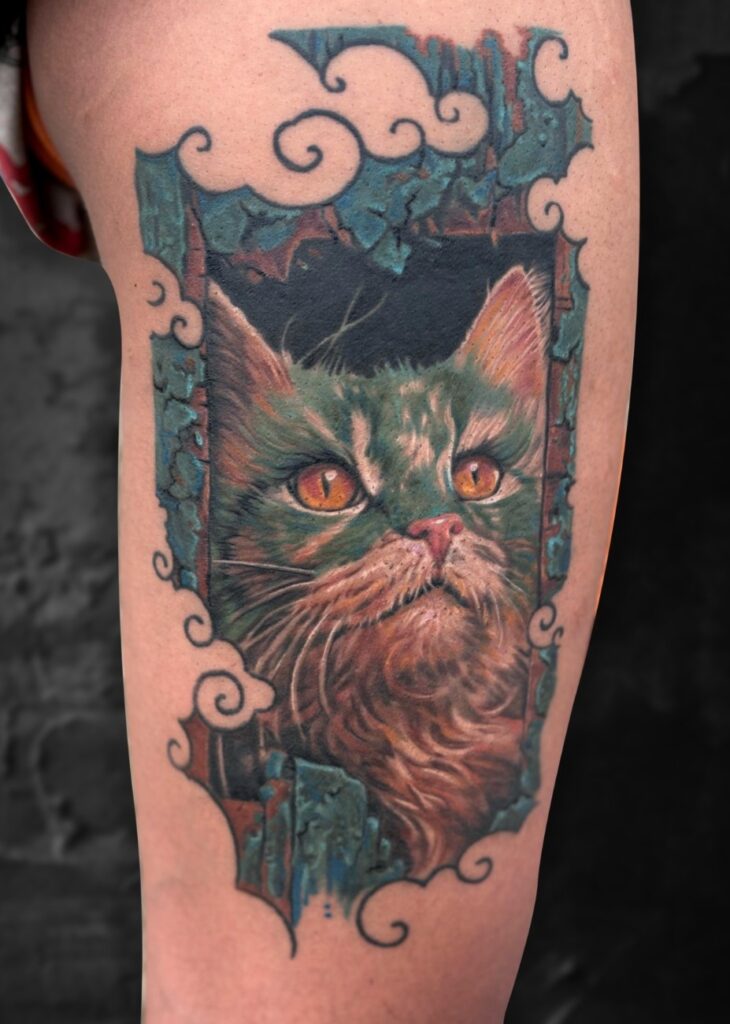
Realism tattoos aim to recreate real life on skin.
That includes:
- Faces
- Animals
- Objects
- Natural textures
- Emotional expressions
Unlike illustrative tattoos, realism leaves no margin for interpretation. If it doesn’t look real, it fails.
What Makes Realism Technically Difficult
- Accurate proportions
- Correct light source placement
- Smooth gradient transitions
- Skin texture simulation
- Avoiding harsh outlines
- Layered shading (not flat filling)
Every highlight and shadow must make sense.
Common Mistakes by Inexperienced Artists
- Over-outlining (kills realism)
- Flat shading
- Incorrect contrast
- “Plastic” skin look
- Muddy details after healing
These mistakes become obvious within months.
Why Realism Requires Expert Artists
Expert artists understand:
- How many passes skin can tolerate
- How to build depth slowly
- How contrast changes after healing
- Which areas can hold detail long-term
Realism tattoos are often multi-session projects for a reason.
2. Portrait Tattoos (Human & Animal)
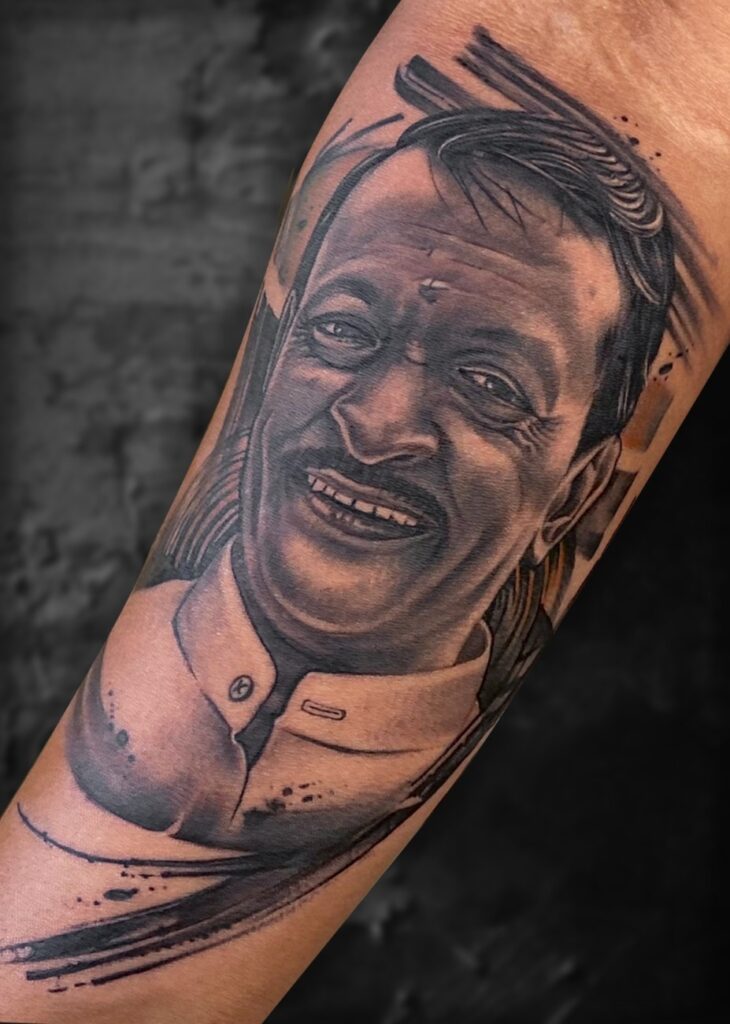
Portrait tattoos are the highest pressure tattoos an artist can do.
Why?
Because humans instinctively recognize faces.
Even a tiny error:
- Crooked eyes
- Wrong jawline
- Off nose angle
- Incorrect shadow
…and the entire tattoo feels “wrong.”
What Makes Portrait Tattoos Extremely Detailed
- Facial symmetry
- Micro-expressions
- Bone structure accuracy
- Natural skin texture
- Emotional resemblance
This applies to human portraits and animal portraits.
Why Portrait Tattoo Expertise Matters
Portrait tattoo expertise is not just about drawing.
It’s about:
- Translating 3D facial planes onto curved skin
- Adjusting facial proportions for muscle movement
- Preserving likeness after healing
- Knowing when to simplify without losing identity
Common Beginner Errors
- Copying photos directly without adaptation
- Too many fine details in small sizes
- Incorrect placement (faces need stable skin areas)
- Lack of contrast planning
Portrait tattoos should never be rushed.
3. Micro-Detail & Fine Line Tattoos
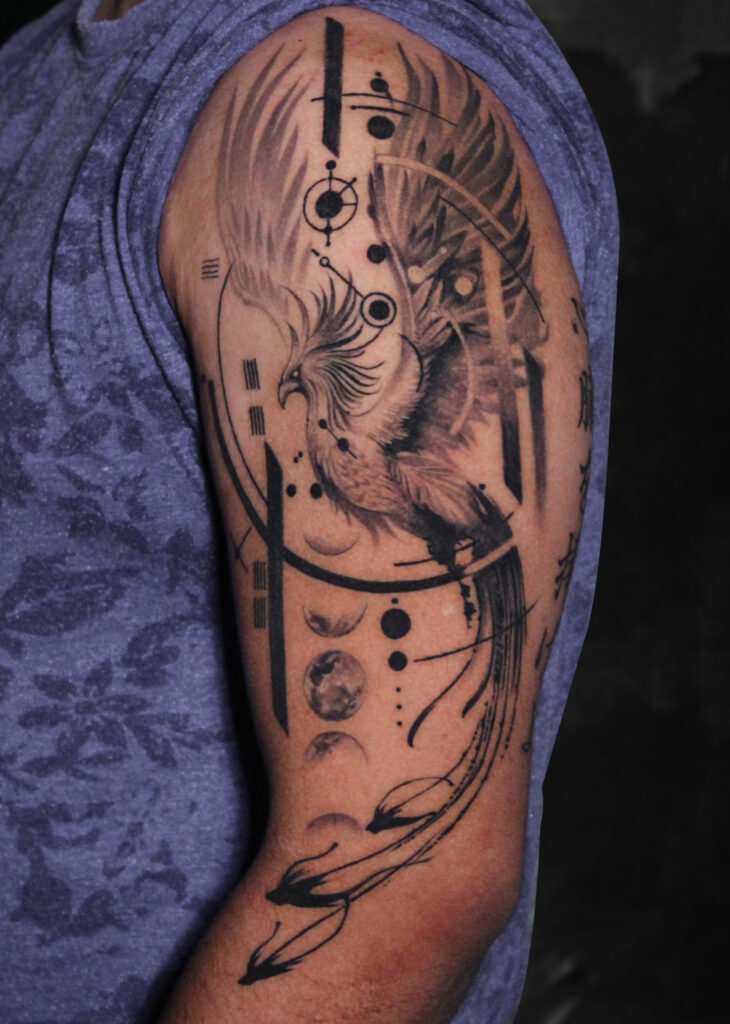
Micro-detail tattoos look simple.
They are not.
These tattoos rely on:
- Ultra-thin line work
- Perfect spacing
- Minimal margin for ink spread
- Long-term stability
Examples include:
- Minimal portraits
- Script tattoos
- Small symbolic designs
- Fine geometric patterns
Why Fine Line Tattoos Are High Risk
Fine lines can:
- Blur
- Fade
- Spread
- Break
If depth control is off by even a fraction, the tattoo will not age well.
Expert Requirements for Fine Line Work
- Consistent hand pressure
- Proper needle choice
- Understanding skin elasticity
- Knowing minimum safe size limits
- Correct ink dilution
Expert artists often refuse designs that are too small not because they can’t do them, but because they care about longevity.
4. Black & Grey Realism
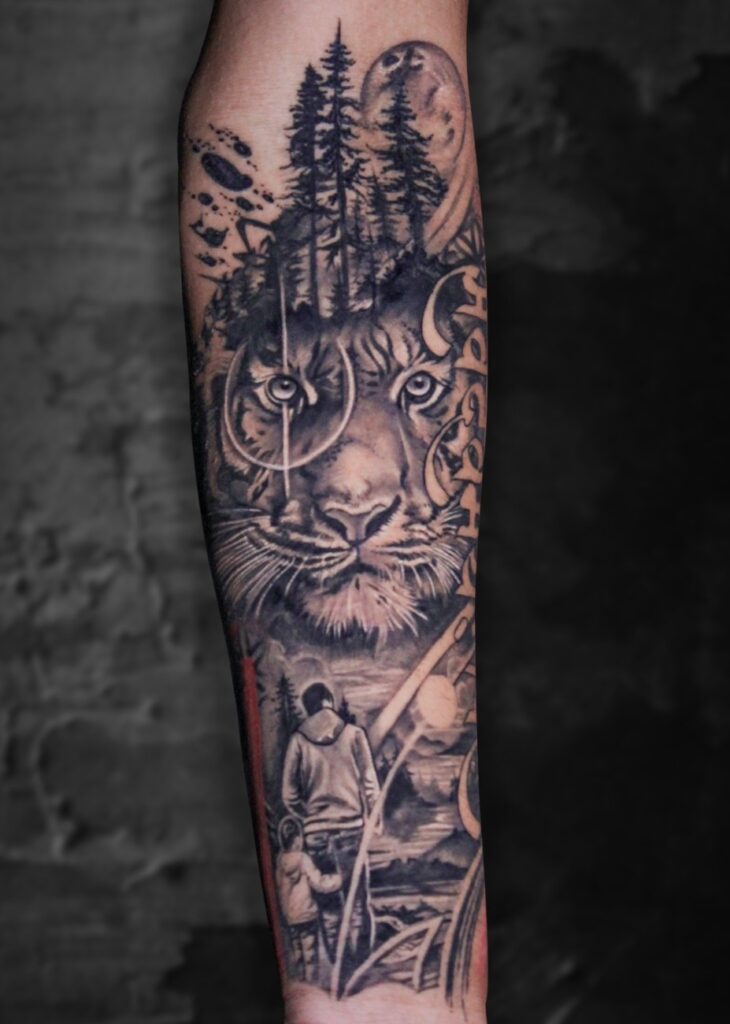
Black & grey realism looks simple at first glance.
In reality, it’s one of the most technically demanding styles.
Why Black & Grey Requires Mastery
- No color to hide mistakes
- Contrast is everything
- Shading must be ultra-smooth
- Skin tone affects final result heavily
- Healing changes the value scale
Every shade of grey matters.
What Experts Do Differently
- Build values gradually
- Use controlled whip shading
- Avoid muddy mid-tones
- Preserve highlights intentionally
- Plan how blacks settle after healing
Beginner artists often:
- Go too dark too fast
- Lose contrast
- Create flat, lifeless images
Black & grey realism rewards patience and experience.
5. Sacred Geometry & Mandala Tattoos
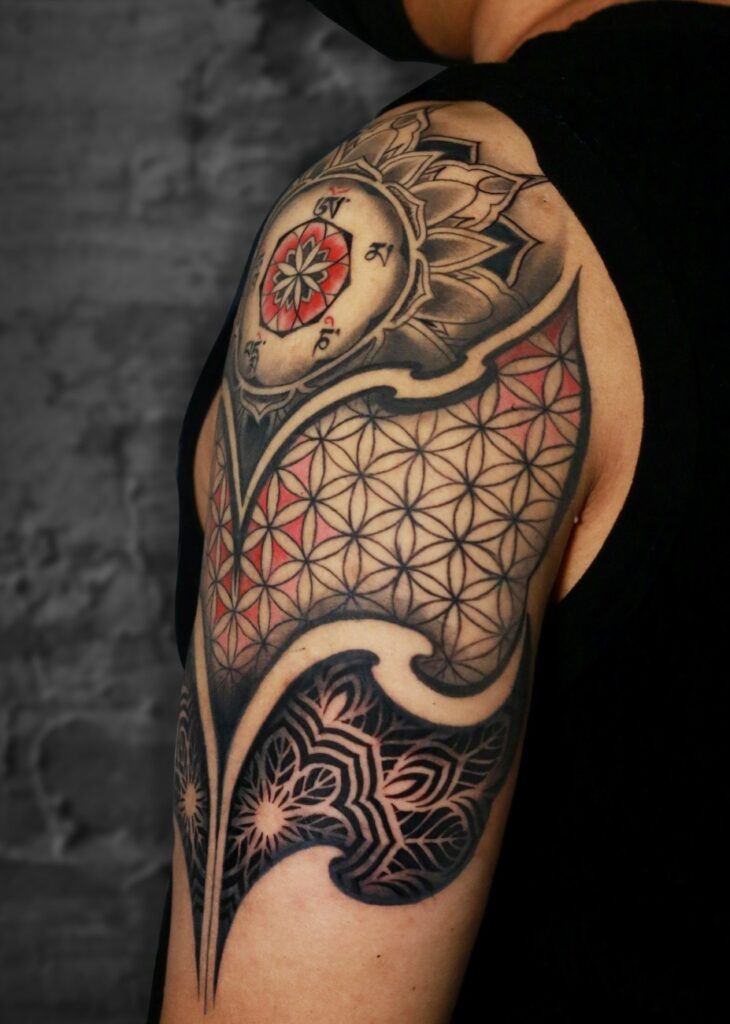
Sacred geometry tattoos may not look “realistic,” but they are brutally unforgiving.
Why?
Because symmetry exposes everything.
What Makes These Tattoos Highly Detailed
- Perfect line consistency
- Exact spacing
- Clean intersections
- Mathematical accuracy
- Visual balance
One uneven line and the whole design feels off.
Why Experts Are Essential
Experts understand:
- How to map designs on curved surfaces
- How body movement affects symmetry
- Where to simplify without losing structure
- How to maintain clarity as lines age
These tattoos require planning, not improvisation.
Why These Styles Age Poorly Without Expertise
Highly detailed tattoos age based on:
- Initial depth
- Line spacing
- Contrast planning
- Skin response
- Aftercare guidance
When done poorly:
- Details merge
- Faces lose expression
- Fine lines disappear
- Shading turns muddy
Expert artists plan for year 5, not day 5.
How to Choose the Right Artist for Detailed Tattoo Styles
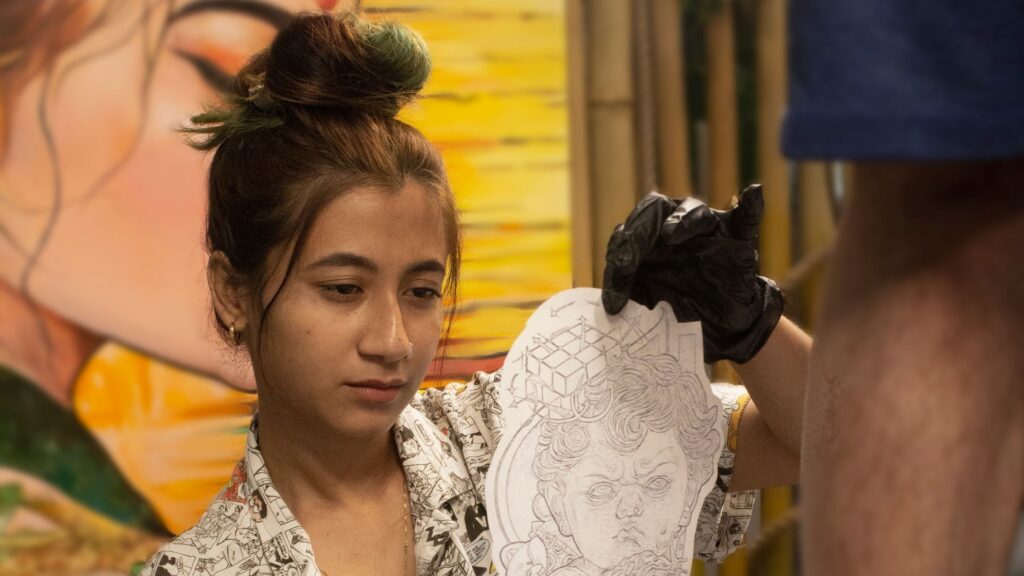
Before booking, ask these questions:
1. Can I see healed photos (6–12 months old)?
Fresh tattoos lie.
Healed tattoos tell the truth.
2. How many sessions will this take?
Experts don’t promise speed.
3. Do you adjust designs for skin tone?
Critical for realism and portraits.
4. What size is the minimum for this detail?
Refusal = professionalism.
5. How do you plan contrast?
If they can’t explain this, walk away.
Why Detailed Tattoos Cost More (And Should)
You’re paying for:
- Years of experience
- Technical knowledge
- Planning time
- Design revisions
- Execution precision
- Long-term quality
Detailed tattoos are not commodities.
They are technical artwork on living skin.
Pune-Specific Considerations for Detailed Tattoos
Climate matters.
Heat, sweat, sun exposure, and lifestyle all affect:
- Healing
- Ink settling
- Detail retention
Expert artists adjust:
- Depth
- Placement
- Aftercare instructions
This matters more for realism and portraits than simple designs.
Red Flags When Booking Detailed Tattoo Styles
Avoid artists who:
- Promise hyper-detail in tiny sizes
- Can’t explain healing
- Avoid showing healed work
- Rush consultations
- Undervalue contrast planning
Highly detailed tattoos expose shortcuts.
Final Thoughts: Detail Demands Respect
The most detailed tattoo styles are not forgiving.
Realism tattoo style, portrait tattoo expertise, fine line work, black & grey realism, and sacred geometry all demand:
- Technical mastery
- Artistic discipline
- Deep skin knowledge
- Patience
Choosing an expert artist isn’t optional.
It’s the difference between a tattoo you’re proud of and one you spend years covering.
If you’re investing in detail, invest in expertise.