

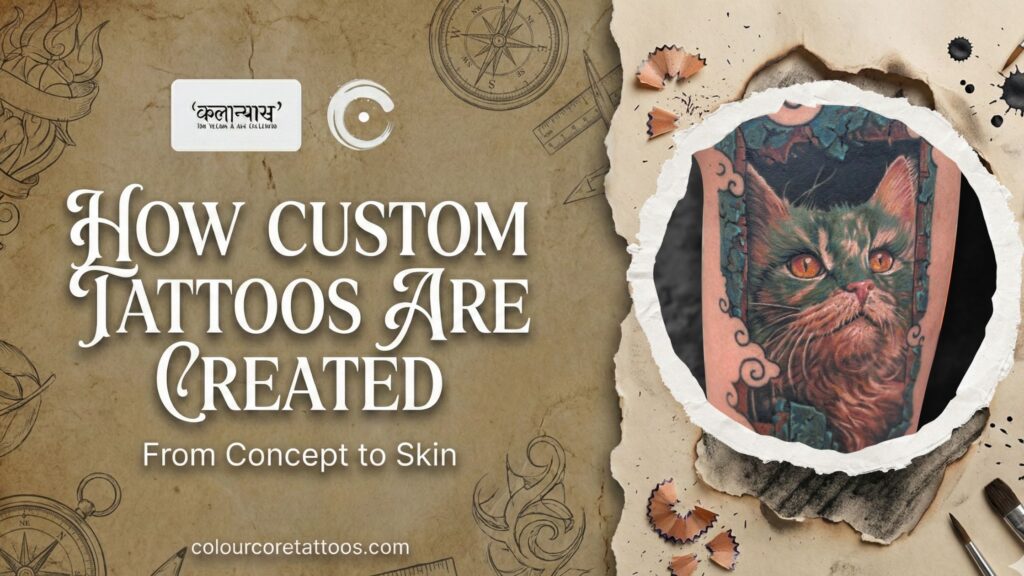
Most people think a tattoo starts when the needle touches the skin. That’s the biggest misconception. In reality, a custom tattoo begins days or even weeks earlier with conversations, questions, design decisions, technical planning, and skin analysis that most clients never see.
If you’ve ever wondered how tattoo designs are made, what really happens inside a professional studio, or how a custom tattoo in Pune goes from a raw idea to a finished piece of art, this guide will walk you through the entire process honestly, step by step.
No filters. No shortcuts. Just the real custom tattoo design process.
What Is a Custom Tattoo (And Why It’s Different From Ready-Made Designs)?
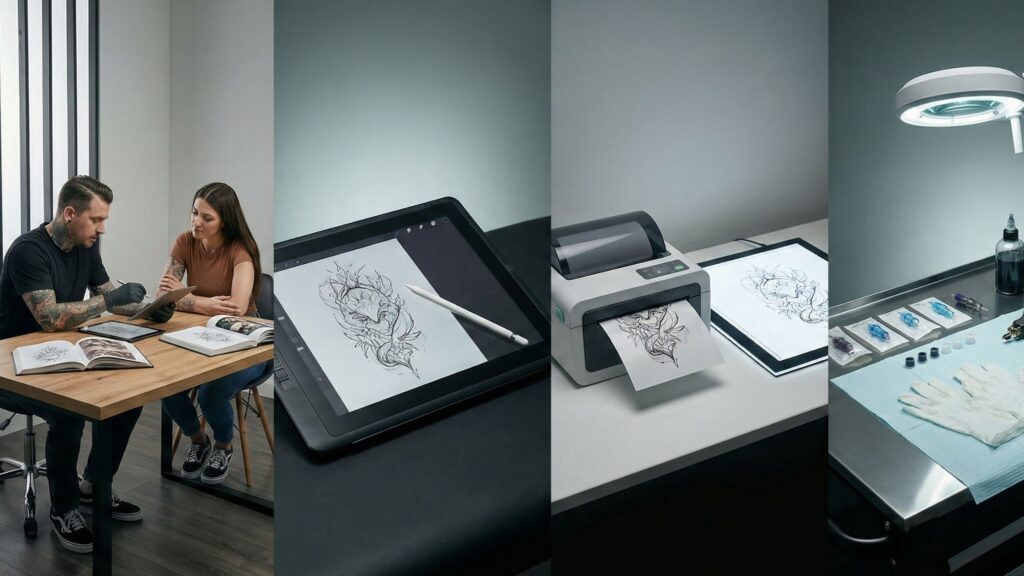
A custom tattoo is not a Pinterest image copied onto your skin.
A custom tattoo is:
- Designed specifically for you
- Built around your body
- Adjusted for your skin tone
- Planned for long-term aging
- Created to match your story, intent, and lifestyle
That’s why custom tattoos take more time, cost more than flash designs, and require deeper collaboration between artist and client.
And that extra effort is exactly what makes them worth it.
Why More People in Pune Are Choosing Custom Tattoos
Over the last few years, Pune has seen a shift.
Clients no longer want:
- Copy-paste tattoos
- Overused symbols
- Designs that look good for Instagram but age poorly
Instead, they want tattoos that:
- Feel personal
- Have meaning
- Are technically sound
- Heal well in Pune’s heat and humidity
That’s why the custom tattoo design process has become the standard at professional studios rather than the exception.
Stage 1: The First Idea (Even If It’s Vague, It’s Enough)
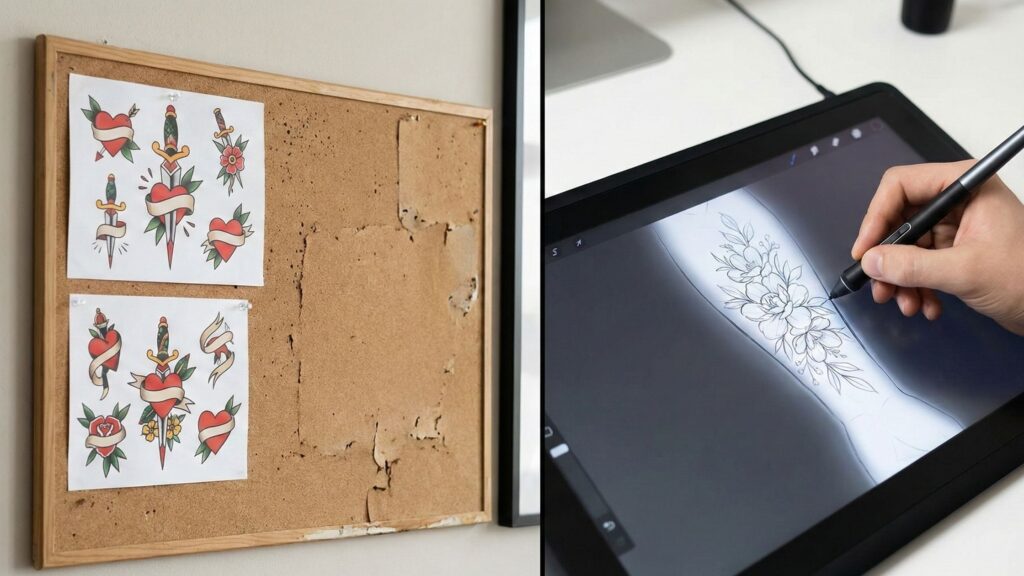
Most clients don’t walk in with a clear design.
They walk in with:
- A feeling
- A memory
- A phase of life
- A symbol they connect with
- Or sometimes just: “I know what I don’t want.”
And that’s completely okay. A professional artist does not expect you to be clear on day one. Their job is to help you get there.
During this stage, artists focus on:
- Why you want the tattoo
- What it represents
- Whether it’s emotional, spiritual, aesthetic, or symbolic
- How permanent you want the message to feel
This conversation shapes everything that follows.
Stage 2: Consultation – Where the Real Work Begins

This is the most important stage of the entire process.
A proper tattoo consultation is not just:
“Okay, show me the reference.”
A real consultation covers:
1. Meaning & Intent
- What does this tattoo represent?
- Is it for yourself or visibility?
- Is it about strength, healing, belief, memory, or aesthetics?
2. Placement Logic
- How your body moves
- How muscles stretch
- How the tattoo will look sitting, standing, walking
- Visibility vs privacy
3. Size Reality
- What size is needed for details to last?
- What happens if it’s made too small?
- How clarity changes over time
4. Lifestyle Factors (Especially in Pune)
- Do you sweat a lot?
- Bike commute?
- Gym routine?
- Outdoor job?
- Sun exposure?
These factors affect healing and longevity far more than people realize.
Studios that take custom work seriously like Colour Core Tattoos invest heavily in this stage, because mistakes made here cannot be fixed later.
Stage 3: Reference Collection (What Artists Actually Look For)
Here’s a truth most people don’t hear: Artists don’t look at references to copy them. They look at references to understand direction.
Good references help define:
- Mood (dark, calm, aggressive, soft)
- Line weight preference
- Level of realism vs abstraction
- Color vs black & grey
- Cultural or symbolic accuracy
Bad references are:
- Low-quality screenshots
- Over-edited tattoos
- Heavily filtered Instagram reels
- Designs that ignore skin tone realities
A professional artist will often say:
“I understand the idea, now let me redesign it properly.”
That’s a good sign.
Stage 4: Skin Analysis (Most Clients Don’t Know This Happens)
Before a single line is drawn, experienced artists evaluate your skin.
They look at:
- Skin thickness
- Elasticity
- Sensitivity
- Oiliness or dryness
- Undertone
- Existing scars or stretch marks
Why this matters:
- Some skins blur fine lines faster
- Some skins don’t hold light colors well
- Some areas swell more during tattooing
- Some tones need higher contrast for visibility
This directly influences:
- Line thickness
- Shading style
- Color selection
- Design complexity
This step separates professional custom tattoo design from guesswork.
Stage 5: Concept Sketching (Not the Final Design Yet)
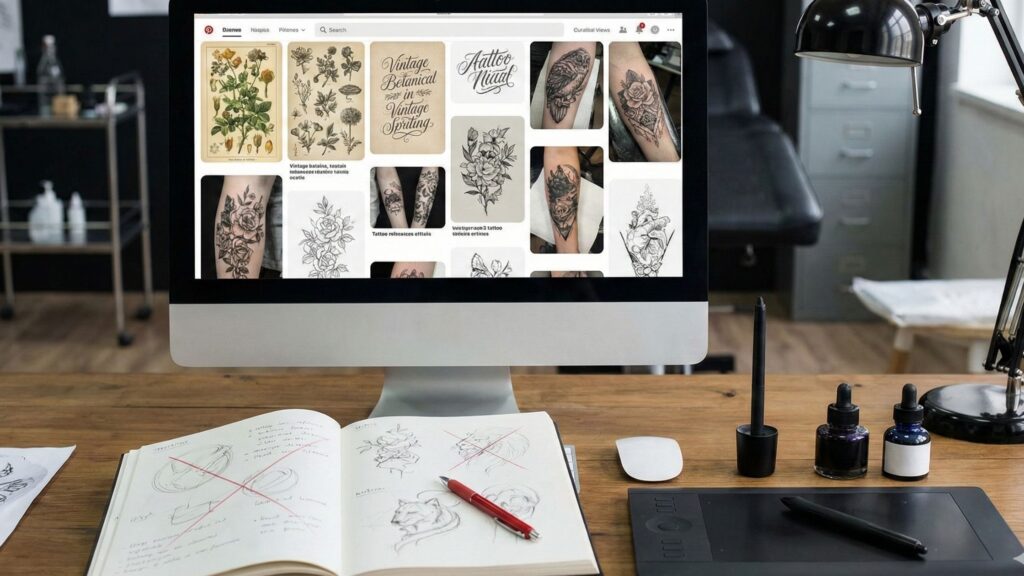
Here’s another misconception. The first sketch is not the final tattoo. It’s a concept.
At this stage, artists explore:
- Composition
- Flow
- Balance
- Negative space
- Overall structure
They test:
- How the design sits on the body
- Whether it feels crowded
- Whether the eye moves naturally through it
Clients usually don’t see multiple rejected sketches but they exist.
Good tattoos are refined through elimination, not instant perfection.
Stage 6: Design Refinement & Customization
Once the concept feels right, refinement begins.
This includes:
- Adjusting proportions
- Cleaning line paths
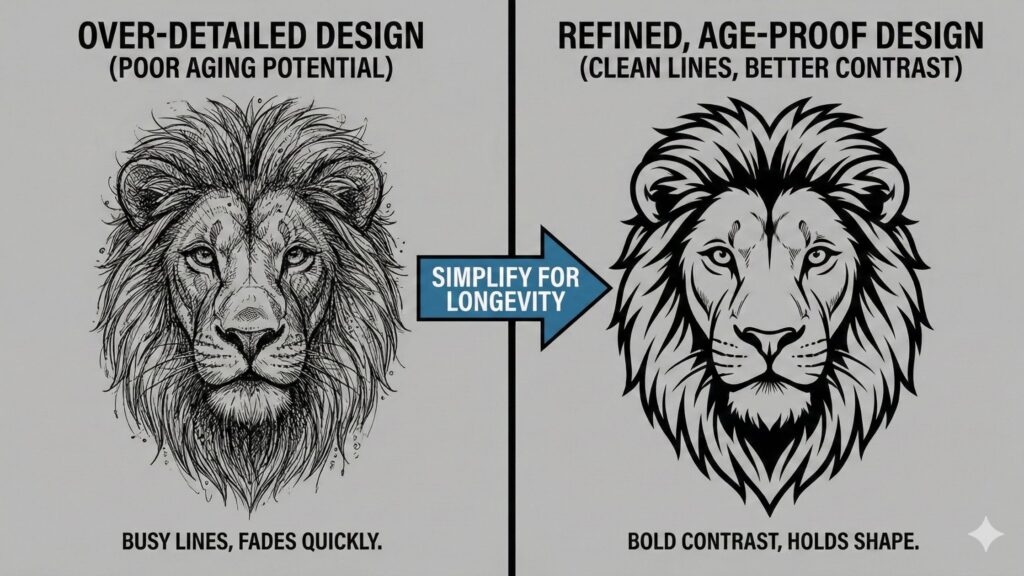
- Simplifying over-detailed areas
- Enhancing contrast
- Making the design age-proof
This is where experience matters most.
An artist may remove details you love not to disappoint you, but to protect the tattoo long-term.
Professionals design for how tattoos age, not how they trend.
Stage 7: Placement Mapping on the Body
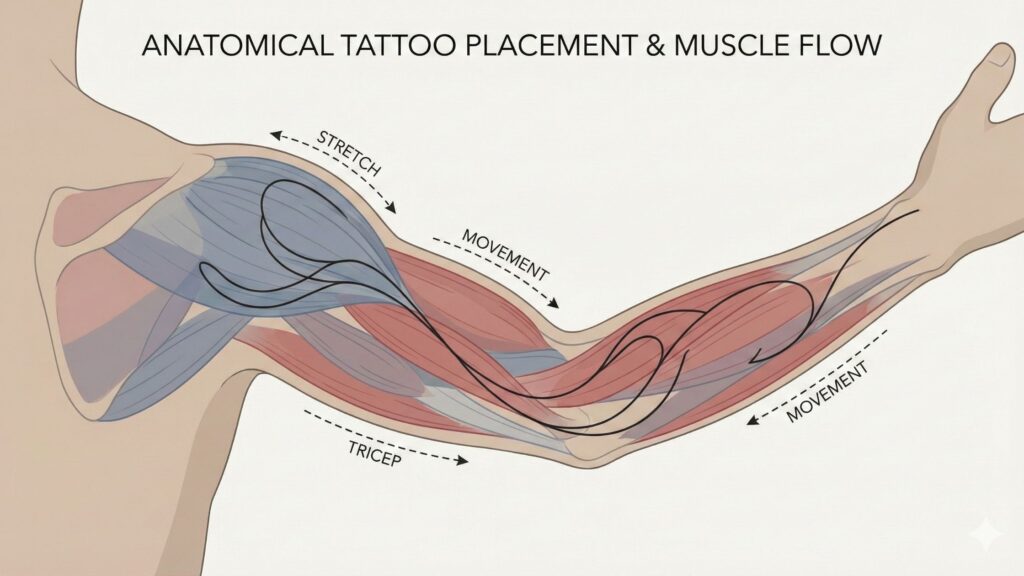
A tattoo is not flat. Your body is not flat.
Before finalizing, artists:
- Map the design digitally or manually
- Adjust angles for muscle flow
- Align designs with bone structure
- Check symmetry during movement
A design that looks perfect on paper can look wrong if placed poorly.
This stage ensures:
- Natural flow
- Visual balance
- Long-term aesthetics
Stage 8: Stencil Creation (Precision Over Speed)
The stencil is the blueprint.
Professionals:
- Clean the skin thoroughly
- Place the stencil carefully
- Adjust position multiple times
- Check alignment from all angles
If an artist takes time here, that’s a good sign.
Rushed stencil placement leads to:
- Crooked tattoos
- Awkward positioning
- Regret later
Stage 9: Final Pre-Tattoo Checks
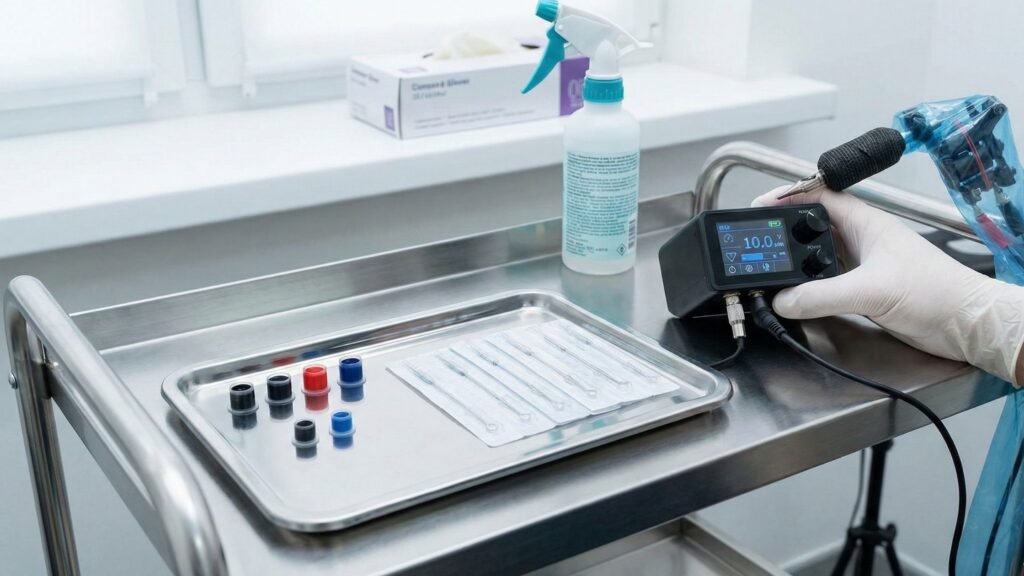
Before tattooing starts, artists double-check:
- Needle configuration
- Ink selection
- Machine settings
- Skin reaction
- Client comfort
This stage ensures:
- Consistency
- Safety
- Controlled execution
It’s part of a disciplined custom tattoo workflow.
Stage 10: The Tattooing Process (Layer by Layer, Not All at Once)
Custom tattoos are not done in one aggressive pass.
They’re built in layers:
- Linework
- Base shading
- Depth building
- Contrast adjustment
- Final detailing
Between passes, artists:
- Clean gently
- Check saturation
- Adjust pressure
- Monitor skin response
This is where patience matters more than speed.
Stage 11: Breaks, Feedback & Real-Time Adjustments
During long sessions:
- Artists check how the skin is reacting
- Adjust technique if swelling starts
- Allow breaks for comfort
- Make micro-adjustments if needed
Professional tattooing is adaptive, not rigid.
Stage 12: Aftercare Planning (Design Is Not Complete Without Healing)
A tattoo is only 50% complete when you leave the studio.
The rest depends on:
- Aftercare discipline
- Pune’s climate
- Daily habits
- Sun exposure
- Friction and sweat
Clients receive:
- Cleaning instructions
- Moisturizing guidance
- Activity restrictions
- Warning signs to watch for
Studios that specialize in custom work including Colour Core Tattoos emphasize aftercare because healing determines how the final tattoo truly looks.
Stage 13: Healing, Settling & Long-Term Aging
Once healed:
- Lines settle
- Colors calm down
- Contrast stabilizes
- Final clarity emerges
This is the true result of the custom tattoo design process not the fresh tattoo photo.
A well-designed custom tattoo should:
- Stay readable
- Maintain balance
- Look intentional
- Age gracefully
Why Custom Tattoos Cost More (And Why That’s Fair)
You’re paying for:
- Consultation time
- Design hours
- Technical planning
- Experience
- Safety
- Longevity
Custom tattoos are not commodities. They are collaborations.
Red Flags That Indicate Poor Custom Tattoo Process
Avoid studios that:
- Skip consultation
- Copy references directly
- Rush stencil placement
- Ignore skin type
- Don’t discuss aging
- Undervalue aftercare
Final Thoughts: Why the Process Matters More Than the Design
A beautiful tattoo starts long before the needle.
It starts with listening, planning, refining, and respecting both art and skin.
If you’re looking for a custom tattoo in Pune, choose artists and studios that treat the process as seriously as the outcome.
That discipline is what turns an idea into something timeless.